

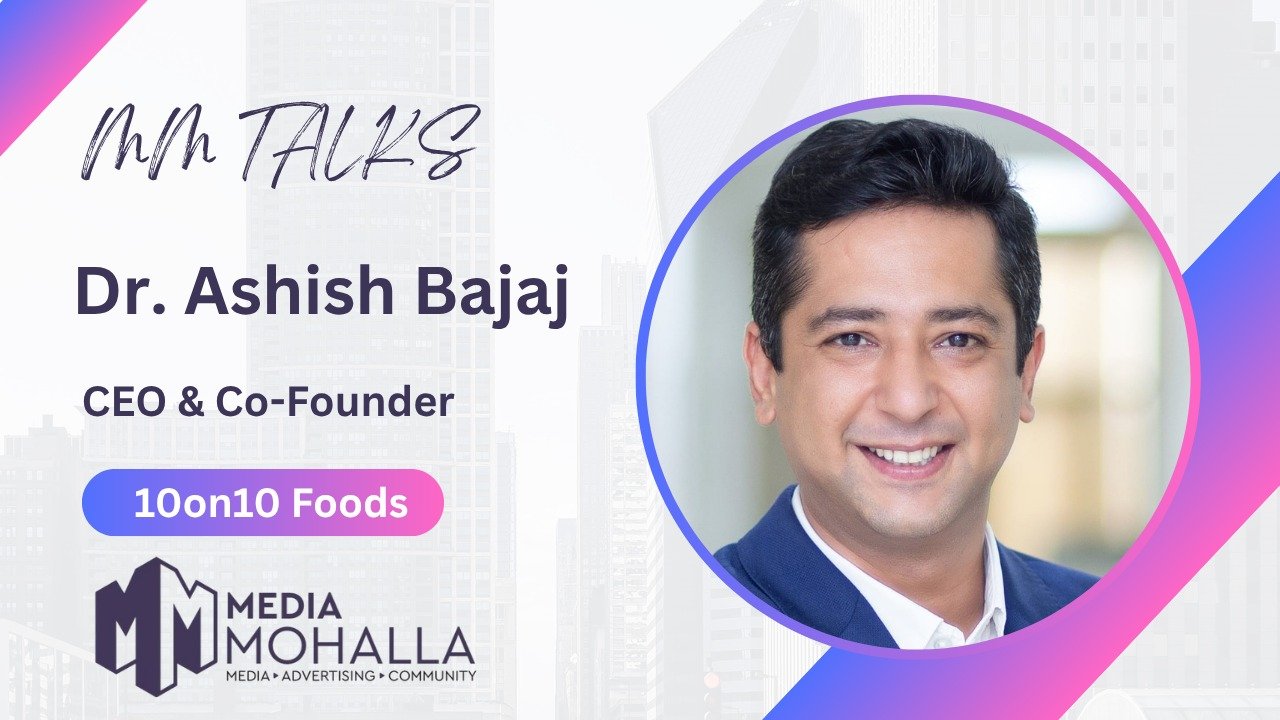
In our latest conversation on Media Mohalla MM Talks, we speak with Ashish Bajaj, an award-winning marketing leader turned entrepreneur who is redefining the future of food and nutrition in India as the Co-Founder & CEO of 10on10 Foods.
With an illustrious career spanning leadership roles at Narayana Health, MediBuddy, Ola, Microsoft, and GroupM, Ashish has built and transformed brands through a powerful combination of strategic thinking, consumer insight, and data-driven innovation. Recognised among India’s most influential marketing professionals, he is the author of The Martech Playbook, a Fortune India 40 Under 40 honouree, and a recipient of several prestigious industry accolades, including Young Lions Cannes and Young Spikes Asia.
Today, through 10on10 Foods, Ashish is bringing a fresh perspective to nutrition by creating science-backed, accessible food solutions for modern consumers. In this exclusive conversation, he shares insights on entrepreneurship, brand-building, consumer behaviour, and the future of India’s food and wellness ecosystem.
1. From building brands for healthcare, mobility, technology, and digital platforms to launching a nutrition-focused food company, what consumer behaviour shifts convinced you that India was ready for a science-backed food brand like 10on10 Foods?
Throughout my career, one thing has remained constant, consumer expectations evolve much faster than industries do. Whether it was healthcare, mobility or technology, I saw consumers becoming increasingly informed, demanding greater transparency and expecting products that solved real problems rather than simply making marketing claims.The food industry is now going through a similar transformation. Consumers today are reading labels, questioning ingredients and looking beyond attractive packaging. They want food that is backed by science, delivers measurable nutritional value and fits seamlessly into their everyday lives. At the same time, convenience has become non-negotiable. People don’t want to choose between health and ease, they expect both.That shift gave us the confidence to build 10on10 Foods. Our objective was never to create another health food brand. We wanted to make everyday staples nutritionally superior without asking consumers to change their eating habits. If we could improve what people already consume daily, we believed we could create a far more meaningful and scalable impact.
2. Having spent years helping established brands scale, how different is the challenge of creating consumer trust from scratch in the food and nutrition category, where claims, ingredients, and transparency are under constant scrutiny?
The biggest difference is that an established brand benefits from accumulated trust, while a new brand has to earn every bit of credibility. In food and nutrition, consumers are rightly sceptical because they’ve been exposed to years of exaggerated health claims and confusing messaging.For us, trust isn’t built through advertising alone; it’s built through evidence. Every product we launch begins with the science, not the marketing. We ensure our claims are backed by testing, we maintain complete transparency around ingredients, and we focus on communicating benefits in a simple, honest manner.Consumers today don’t expect perfection, but they do expect authenticity. When brands are transparent about what their products do, and equally important, what they don’t do, they build long-term credibility. That’s the philosophy we’ve adopted at 10on10 Foods.
3. You have often spoken about the intersection of data, technology, and marketing. How are you applying MarTech principles and consumer intelligence at 10on10 Foods to influence product innovation, customer retention, and brand building?
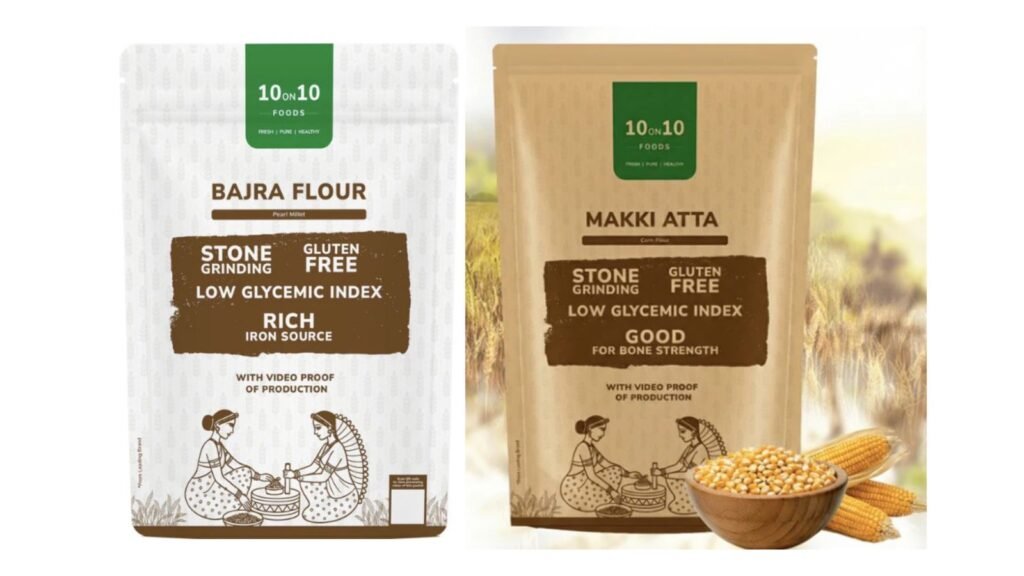
One of the biggest advantages of being a digital-first brand is the ability to continuously learn from consumers. Every interaction provides valuable signals about preferences, consumption patterns and unmet needs, and those insights shape almost every decision we make.At 10on10 Foods, consumer intelligence goes far beyond marketing, it influences our products, supply chain and customer experience. For instance, one of the strongest insights we observed was that consumers increasingly value freshly milled food over products that have been sitting on shelves for weeks. That understanding led us to build our supply chain and fulfilment model around delivering fresh products directly to consumers.Another important insight was that consumers don’t necessarily want to change their eating habits to become healthier, they simply want their everyday meals to better meet their nutritional needs, especially their protein requirements. That thinking inspired the launch of our Everyday Protein range, which enables consumers to add more protein to foods they already consume every day, without changing their routines.At the same time, I firmly believe data should guide decisions, not dictate them. Consumer behaviour is ultimately shaped by emotion, culture and habits, which cannot always be explained through numbers alone. The most effective brands combine analytical rigour with human empathy, and that’s the balance we strive to achieve at 10on10 Foods.
4. India’s health-conscious consumers are increasingly seeking convenience without compromising nutrition. How do you balance scientific credibility with mass-market appeal while ensuring the brand remains culturally relevant to Indian consumption habits?
Healthier eating will never become mainstream if it requires consumers to completely change the way they eat. That’s why we’ve focused on improving foods that are already deeply embedded in Indian kitchens rather than introducing unfamiliar alternatives.Scientific credibility is extremely important, but consumers shouldn’t need a nutrition degree to understand a product. Our responsibility is to simplify science into benefits that are meaningful in everyday life. At the same time, we ensure our products remain aligned with familiar tastes, cooking methods and consumption habits.Innovation succeeds when it complements culture rather than attempting to replace it. We believe the future of nutrition in India lies in making traditional staples healthier through science while preserving the familiarity consumers value.
5. As the author of The Martech Playbook, you’ve witnessed the evolution of digital marketing firsthand. What marketing practices that worked five years ago do you believe are becoming obsolete, and what capabilities should modern consumer brands invest in today?
The era of optimising purely for impressions, clicks and reach is gradually giving way to an era of relevance, trust and discoverability. Consumers today engage with brands across search engines, AI assistants, marketplaces, social platforms and communities. Marketing has become significantly more fragmented and far more intelligent.Five years ago, success was often measured by how effectively brands interrupted consumers. Today, success depends on whether brands are genuinely useful when consumers actively seek information or solutions.Modern brands need to invest in first party data, AI-enabled consumer intelligence, content credibility and community building. Equally important is organisational agility. Marketing teams must be able to test, learn and adapt quickly because consumer expectations, technology and digital platforms are evolving at an unprecedented pace.Ultimately, marketing is becoming less about persuasion and more about earning trust consistently across every touchpoint.
6. Having led marketing functions across organisations like Narayana Health, MediBuddy, Ola, and Microsoft, what leadership lessons have proven most valuable in your transition from a CMO responsible for growth to a founder accountable for every aspect of the business?
As a CMO, your primary responsibility is driving growth within an established organisation. As a founder, every decision is interconnected. Product, operations, finance, supply chain, hiring and customer experience all influence each other. It forces you to think much more holistically.One lesson that has stayed with me throughout my career is that sustainable growth always begins with solving genuine consumer problems. Marketing can accelerate adoption, but it cannot compensate for a weak product.Another important lesson is the importance of building the right team. Founders often feel they need to have all the answers, but successful businesses are built by bringing together people with complementary strengths and empowering them to make decisions.Finally, entrepreneurship reinforces humility. Every day presents new challenges, and every interaction with consumers becomes an opportunity to learn. That mindset of continuous learning has perhaps been my biggest leadership takeaway.
7. Looking ahead, what is your vision for the future of India’s food-tech and nutrition ecosystem, and where do you see 10on10 Foods playing a transformative role in shaping healthier consumer choices at scale?
India is at the beginning of a significant shift in how people think about food. Nutrition is moving from being a specialised category to becoming an everyday consideration. Consumers are increasingly seeking products that combine taste, convenience and measurable health benefits without requiring dramatic lifestyle changes.I believe the future of food-tech will be driven by personalisation. As AI, data and manufacturing technologies continue to evolve, we’ll move away from a one-size-fits-all approach to nutrition. In the years ahead, it will become increasingly possible for the same manufacturing facility to create products tailored to the unique nutritional needs of different individuals. Your ideal nutritional profile may be very different from mine, and technology will make it easier to deliver that level of customisation at scale.At 10on10 Foods, our vision is to build towards that future while making better nutrition accessible today through everyday staples that millions of households already consume. Rather than asking consumers to change their eating habits, we want to improve the foods they already trust and enjoy. As personalisation becomes more mainstream, we believe brands that combine science, technology and consumer insights will be best positioned to deliver meaningful health outcomes at scale.