


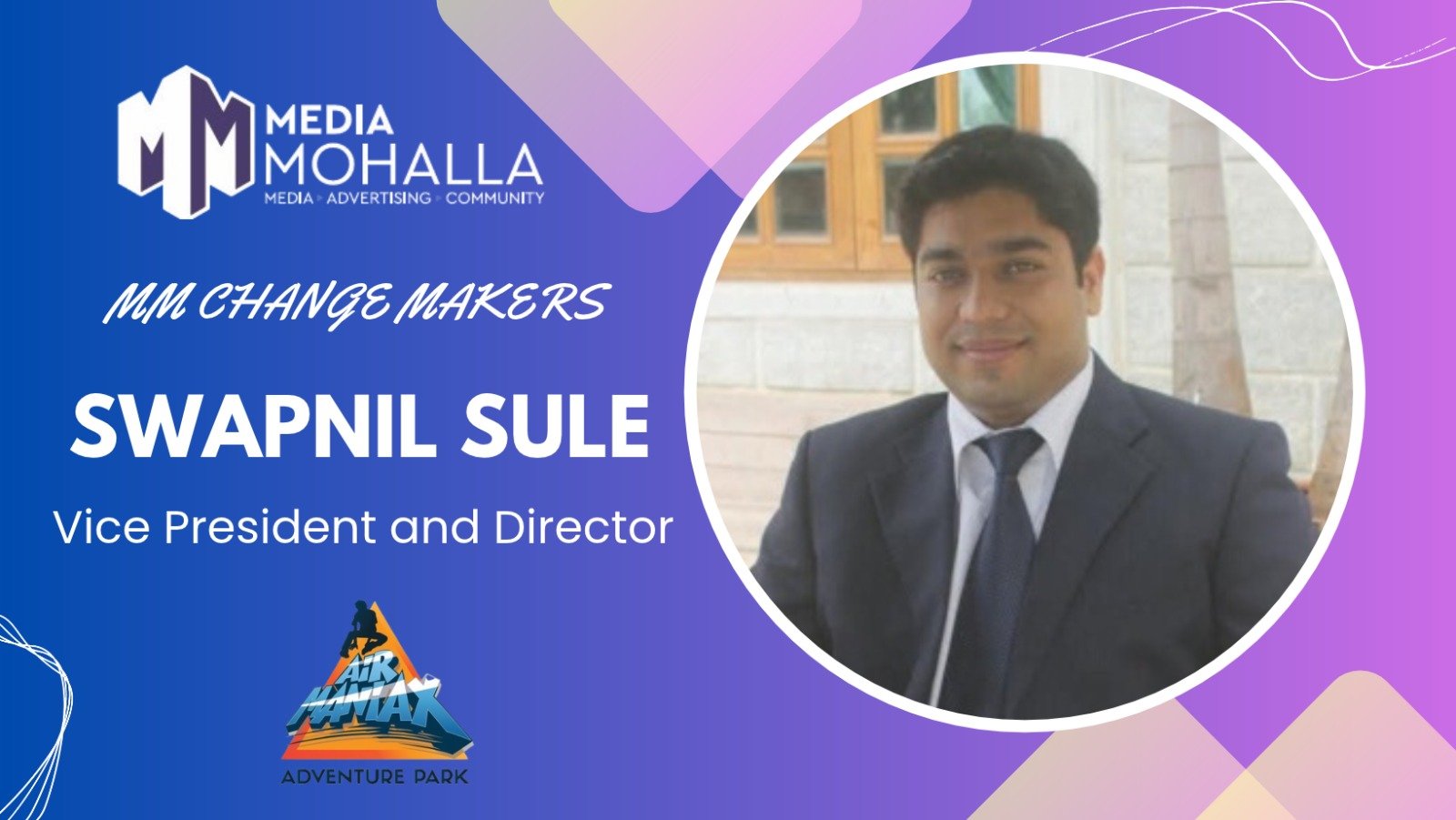
In our recent interaction for Media Mohalla’s MM Change Makers Exclusives, we spoke with Swapnil Sule, Vice President & Director , Airmaniax India Private Limited, about evolving consumer expectations and the future of experiential entertainment. He shares his insights on building guest loyalty, balancing safety with innovation, and how technology, personalization, and community are shaping the next generation of family entertainment destinations.
1. Having worked across hospitality, retail, malls, and family entertainment centers, how has consumer behavior evolved over the last decade, and what key trends are shaping the future of experiential entertainment brands like Air Maniax?
Over the last decade, consumer behavior has shifted from being transaction-driven to experience-driven. Today’s consumers, particularly millennials and Gen Z families, place greater value on experiences that create memories, encourage social interaction, and promote active participation.
The rise of digital lifestyles has also increased the demand for physical experiences that offer excitement, wellness, and meaningful engagement. Consumers are no longer looking for just a product or service; they seek immersive environments that combine entertainment, social connection, and convenience.
For experiential brands like Air Maniax, the future will be shaped by three key trends: active entertainment, personalized experiences, and technology-enabled engagement. Families increasingly prefer destinations where children can stay physically active while parents enjoy quality time together. At the same time, data-driven personalization, loyalty programs, and immersive attractions will play a significant role in enhancing guest satisfaction and retention.
2. Air Maniax operates in a highly experience-driven category. How do you balance operational excellence, safety standards, and guest engagement while ensuring the brand delivers memorable experiences consistently across locations?
In our industry, guest experience begins with safety. No matter how exciting an attraction is, customers must feel confident that they are in a secure environment. At Air Maniax, we treat safety as a non-negotiable foundation upon which the entire experience is built.
Operational excellence comes from robust standard operating procedures, continuous staff training, regular audits, and proactive maintenance programs. Equally important is empowering frontline teams to engage with guests positively and enthusiastically.
The balance is achieved by ensuring that operational processes remain largely invisible to the customer while enabling seamless, fun, and memorable interactions. Consistency across locations is maintained through standardized training frameworks, performance metrics, and a strong culture that prioritizes both guest delight and operational discipline.
3. You often emphasize customer experience as the biggest differentiator. What are some customer-centric initiatives that have helped strengthen brand loyalty and repeat footfall in the entertainment and leisure industry?
Customer loyalty in the entertainment industry is built through emotional connections rather than transactional rewards alone. One of the most effective initiatives has been creating personalized guest journeys from booking to post-visit engagement.
Membership programs, birthday experiences, school partnerships, and corporate engagement initiatives have all contributed significantly to repeat visitation. We have also focused heavily on collecting guest feedback and converting insights into action.
Another important factor is creating shareable moments. When guests leave with memorable experiences that they want to share with friends and family, organic advocacy becomes one of the strongest drivers of brand growth. Ultimately, brands that consistently listen, adapt, and exceed expectations are the ones that earn long-term loyalty.
4. With malls increasingly transforming into lifestyle and entertainment destinations, how do you see brands like Air Maniax contributing to the future of retail-led entertainment ecosystems in India and the Middle East?
The role of malls has evolved dramatically from shopping destinations to community hubs that offer dining, entertainment, wellness, and social experiences. Entertainment anchors like Air Maniax are becoming increasingly important because they drive both footfall and dwell time.
In India and the Middle East, consumers are seeking destinations where families can spend several hours rather than simply complete a shopping trip. Active entertainment brands contribute by creating reasons to visit repeatedly and by attracting diverse customer segments, including families, schools, corporate groups, and young adults.
As retail spaces continue to evolve, I believe experiential entertainment will become a core component of mall strategy, helping create vibrant ecosystems where retail, dining, and leisure complement each other to deliver a holistic consumer experience.
5. The active entertainment industry is becoming increasingly competitive. What strategies do you believe are essential for brands to remain relevant and create a lasting emotional connection with today’s consumers?
Sustained relevance requires continuous innovation. Consumers today have countless entertainment options competing for their attention, so brands must constantly refresh experiences and provide new reasons to return.
However, innovation alone is not enough. Brands must also create emotional resonance by understanding what matters most to their guests. For families, that often means creating moments of joy, achievement, and togetherness.
The most successful brands will focus on three pillars: innovation, community, and personalization. Those that can consistently evolve their offerings while maintaining authenticity and delivering exceptional service will build stronger emotional connections and long-term brand affinity.
6. Having led teams across hospitality and entertainment businesses, what leadership principles have remained constant throughout your journey, and how do you cultivate a high-performance culture within your organization?
While industries may change, leadership fundamentals remain remarkably consistent. The principles that have guided me throughout my career are accountability, transparency, empowerment, and continuous learning.
I strongly believe that culture is built through consistency rather than slogans. High-performance teams emerge when people clearly understand expectations, receive regular feedback, and feel supported in their professional growth.
I also believe in leading from the front. Frontline employees directly influence customer experiences, so investing in their development and recognizing their contributions is critical. When teams understand the purpose behind their work and feel valued, they naturally deliver stronger results and higher levels of guest satisfaction.
7. Expansion is a major focus for modern experience-led brands. When entering new markets, what factors do you consider most critical in maintaining brand consistency while adapting to local consumer preferences?
Successful expansion requires balancing standardization with localization. The core brand promise, safety standards, operational processes, and service philosophy must remain consistent across all locations.
At the same time, consumer preferences, demographics, cultural nuances, and spending patterns can vary significantly between markets. Understanding local customer behavior is therefore essential.
The most effective approach is to maintain a strong global framework while allowing flexibility in areas such as programming, events, partnerships, food and beverage offerings, and marketing communication. This ensures the brand remains recognizable while still feeling relevant to local communities.
8. Looking ahead, how do you envision technology—including AI, immersive experiences, gamification, and data-driven personalization—reshaping the future of family entertainment and experiential retail over the next five years?
Technology will fundamentally redefine how entertainment brands engage with guests before, during, and after their visits. AI and data analytics will enable highly personalized experiences, allowing brands to better understand customer preferences and anticipate their needs.
Gamification will become increasingly integrated into physical attractions, creating more engaging and repeatable experiences. Guests will not only participate in activities but also track achievements, unlock rewards, and compete socially through digital platforms.
We will also see greater adoption of immersive technologies that blend physical and digital experiences. However, I believe the future is not about replacing human interaction with technology—it is about using technology to enhance engagement, improve operational efficiency, and create more meaningful experiences.
The brands that successfully combine physical activity, immersive entertainment, and intelligent personalization will define the next generation of family entertainment and experiential retail.