

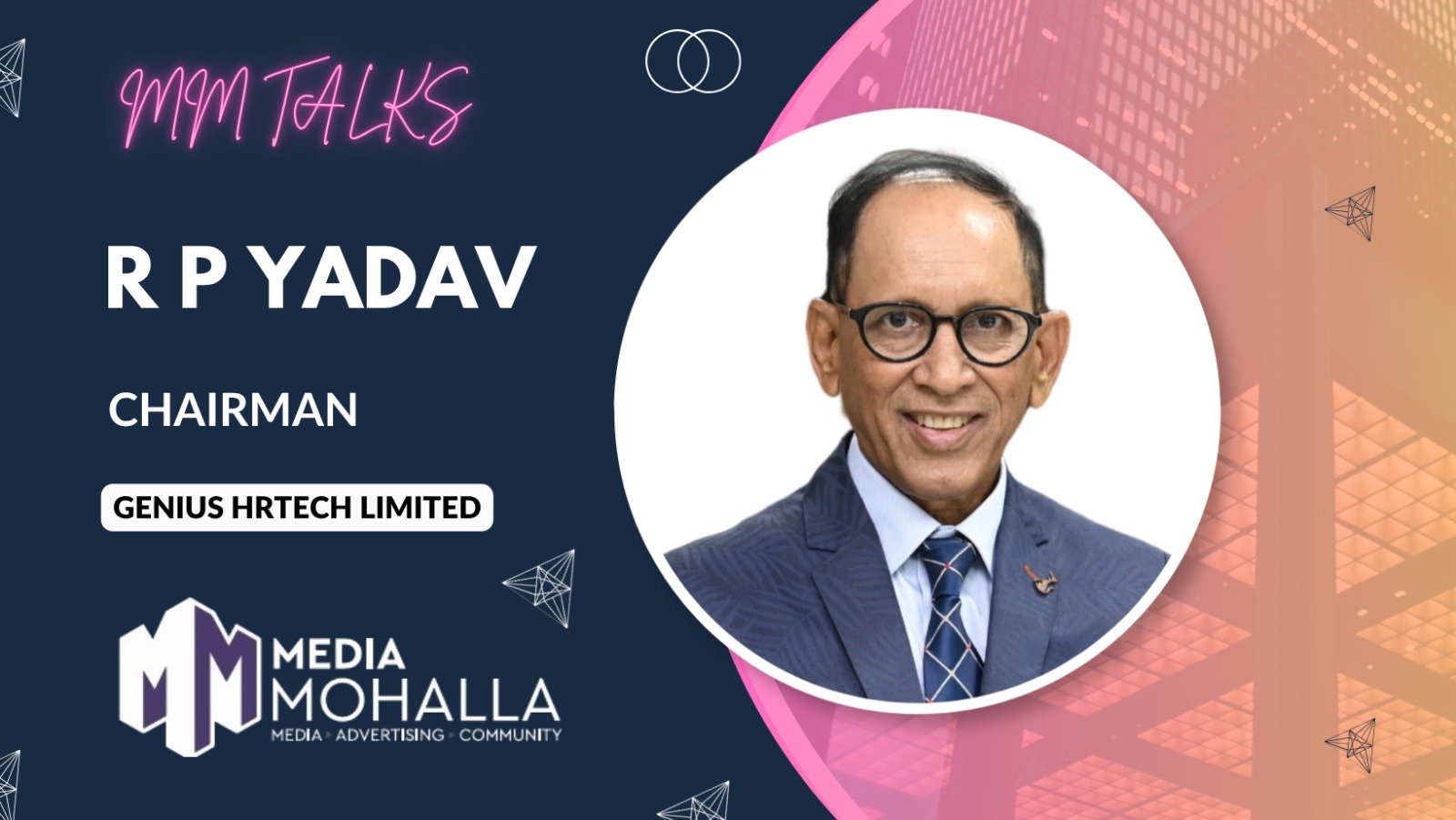
In our latest conversation for Media Mohalla MM Talks, we engage with R. P. Yadav, Chairman of Genius HRTech, one of India’s leading integrated HR and workforce solutions companies. With more than three decades of experience spanning recruitment, staffing, HR technology, and workforce management, he has been instrumental in transforming the talent landscape for organizations across diverse industries.
Under his visionary leadership, Genius HRTech has grown into a trusted partner for over 3,500 clients across India and international markets, delivering innovative workforce solutions that address evolving business needs. Beyond business growth, Mr. Yadav has championed industry thought leadership through the company’s proprietary DigiPoll surveys and insightful research, offering valuable perspectives on the future of work, emerging workforce trends, and the evolving expectations of employers and talent alike.
In this exclusive MM Talks conversation, he shares his views on the future of HR, the role of technology in workforce transformation, leadership in an AI-driven era, and what it takes to build resilient, future-ready organizations.
Q1. Having built Genius HRTech over three decades from a recruitment firm into one of India’s leading integrated HR and workforce solutions companies, how have you seen the HR industry evolve, and what do you believe will define its next phase of growth?
When we started over three decades ago, HR was largely viewed as a support function focused on hiring and administration. Today, it has evolved into a strategic business partner that directly influences productivity, business continuity and long term growth. Organizations now expect HR to provide workforce intelligence, anticipate skill requirements and create agile talent strategies that can adapt to rapidly changing market conditions.
The next phase of growth will be defined by the convergence of technology, data and human-centric leadership. AI, predictive analytics and automation will make HR processes faster and more efficient, but the real differentiator will remain an organization’s ability to build resilient, skilled and engaged workforces. The future of HR is not just about managing people, it is about enabling organizations to respond to change with confidence while ensuring that technology enhances, rather than replaces, the human element.
Q2. Artificial Intelligence is rapidly transforming recruitment, workforce management and employee engagement. How do you see AI changing the role of HR professionals, and where should organizations draw the line between automation and human decision-making?
AI is transforming HR by automating repetitive processes, improving hiring efficiency and enabling more informed workforce decisions. It can significantly reduce the time spent on resume screening, workforce planning, compliance monitoring and employee analytics, allowing HR professionals to focus on strategic initiatives such as leadership development, employee engagement and organizational culture.
However, there are aspects of HR where human judgement remains irreplaceable. Hiring decisions involve assessing cultural fit, leadership potential and emotional intelligence, qualities that cannot be evaluated by algorithms alone. Similarly, employee development, conflict resolution and sensitive workplace conversations require empathy and context. The most successful organizations will be those that use AI to augment human decision-making rather than automate it entirely, ensuring technology improves outcomes without compromising fairness or trust.
Q3. Through Genius HRTech’s DigiPoll surveys, you’ve been tracking workplace and hiring trends across industries. What are some of the most significant shifts you’ve observed in employer priorities and workforce expectations over the past year?
Our DigiPoll surveys have consistently shown that organizations are becoming far more strategic in how they approach talent. Businesses today are focused on improving productivity while simultaneously investing in capability building, digital transformation and workforce resilience. AI adoption has emerged as a key priority, with organizations looking to automate routine tasks while equipping employees with new digital skills.
On the employee side, expectations have evolved beyond compensation. Professionals increasingly value career growth, continuous learning, flexible work arrangements and meaningful workplace experiences. There is also a growing emphasis on wellbeing and purpose driven employment. These shifts indicate that employers can no longer compete solely on salaries; they must offer holistic employee value propositions that combine learning opportunities, technology enablement and a strong organizational culture.
Q4. Many organizations today are balancing business growth with cost optimization while also trying to attract and retain skilled talent. What strategies do you believe companies should adopt to build resilient and future-ready workforces in this environment?
The focus should move from cost reduction to workforce optimization. Organizations need to identify critical skills, invest in continuous upskilling and build flexible workforce models that can adapt to changing business needs. Leveraging technology for workforce planning, productivity measurement and talent analytics enables better resource allocation while maintaining operational efficiency.
Equally important is creating an environment where employees see long-term career opportunities. Companies that invest in internal mobility, leadership development and employee wellbeing tend to achieve stronger retention and higher productivity. A resilient workforce is built not by hiring more people, but by ensuring the right people have the right skills, supported by the right technology and leadership.
Q5. India’s workforce is becoming increasingly diverse, with Gen Z, gig workers and technology-enabled employees reshaping workplace expectations. How should HR leaders rethink leadership, employee engagement and organizational culture to stay relevant?
Today’s workforce expects greater flexibility, transparency and opportunities for continuous growth. Gen Z employees seek meaningful work, faster career progression and regular feedback, while the gig workforce values autonomy and seamless digital experiences. HR leaders must therefore adopt more inclusive and adaptive leadership styles that recognise these diverse expectations without losing sight of organizational goals.
Building a strong culture now requires continuous communication, personalized learning pathways and technology enabled employee engagement. Leadership must become more collaborative and data informed while maintaining empathy and trust. Organizations that successfully combine flexibility with a strong sense of purpose will be better positioned to attract and retain talent across generations.
Q6. As organizations manage increasingly distributed and diverse workforces, what role do technology and data play in helping HR teams improve efficiency, workforce planning and employee experience?
Technology has become the backbone of modern workforce management. Data driven HR enables organizations to forecast hiring requirements, identify skill gaps, monitor employee engagement and make evidence-based workforce decisions. This improves operational efficiency while allowing businesses to respond more quickly to market changes.
At the same time, technology enhances the employee experience by streamlining onboarding, learning, performance management and communication. However, data should support decision-making rather than replace it. The greatest value comes when organizations combine analytics with human insight to create more personalized and effective workforce strategies.
Q7. Looking ahead, what are your priorities for Genius HRTech over the next 12 months, and what major trends do you believe will redefine the future of work and human resources in India?
Our priority is to continue strengthening Genius HRTech as a technology driven workforce solutions partner that helps organizations navigate an increasingly complex talent landscape. We will continue investing in AI-enabled HR solutions, expanding our workforce management capabilities and providing deeper market intelligence through initiatives such as our DigiPoll surveys to help clients make informed workforce decisions.
Looking ahead, I believe the future of HR in India will be shaped by AI-enabled decision making, skills-based hiring, workforce agility and continuous learning. Organizations will increasingly measure success not just by business performance but by their ability to build adaptable, future-ready workforces. HR will continue to evolve from an operational function into a strategic driver of business transformation, and companies that embrace this shift will be best positioned for sustainable growth.